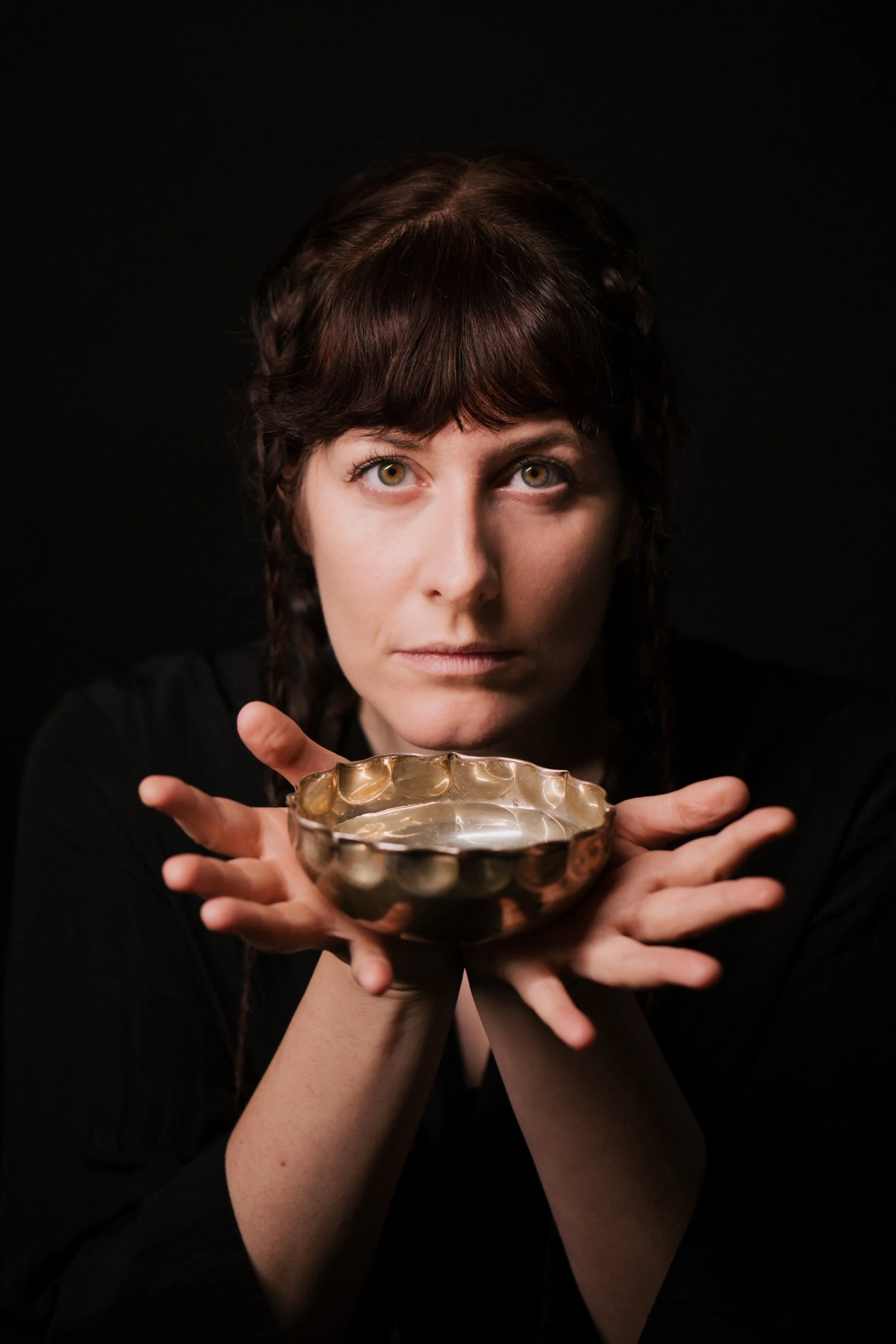
Sacred Space is an experimental performance at the intersection of ritual, electronic sound art, and embodied vocal practice. It explores the shadowed relationship between the sacred and the feminine through a fusion of voice, live electronics and visuals.
Created and performed by Jolanda Moletta, the work unfolds through four elemental archetypes - the Shaman, the Sibyl, the Mystic, and the Witch - figures who historically operated at the edges of accepted spiritual power. These are the original outsiders: keepers of hidden knowledge, mediators between worlds, and embodiments of forms of sacredness that dominant cultures have repeatedly exiled, feared, or erased.
The performance investigates how the feminine communicates with the invisible through Nature as medium: cycles of decay and renewal, geological resonance, breath, fire, water, and subterranean spaces. Instead of narrative, Sacred Space relies on the body as instrument and memory-holder, drawing on ancestral intuition that predates language.
The work combines raw, extended vocal techniques with electronics and live sound processing.
The sound world is dark, immersive, and textural: sustained tones and elemental breaths processed through live electronics, feedback, distortion, and low-frequency resonance, shifting layers that blur ritual intensity with contemporary experimental aesthetics.
Sacred Space constructs a sensory environment rather than a stage. Light, shadow, and minimal visual cues evoke the mythic terrains these archetypes once inhabited: caves, stone chambers, subterranean sanctuaries, solitary cells. The audience is invited into a liminal zone where time folds and ancient memory becomes palpable through sound.
At its core, the performance traces a historical tension: women welcomed into sacred spaces only under control, or forced into secrecy, danger, or solitude when practicing their own forms of spiritual connection. Sacred Space exposes this duality, communion versus exclusion, revelation versus erasure.
The piece unfolds as a descent: part ritual, part electronic performance, part psychic excavation. The audience is invited to be part of the sound ritual.
Sacred Space is an immersive, transformative experience that merges contemporary experimental electronics with archaic ritual memory: a sanctuary built from sound, where forgotten feminine lineages rise through voice, body, and technology.
SACRED SPACE +
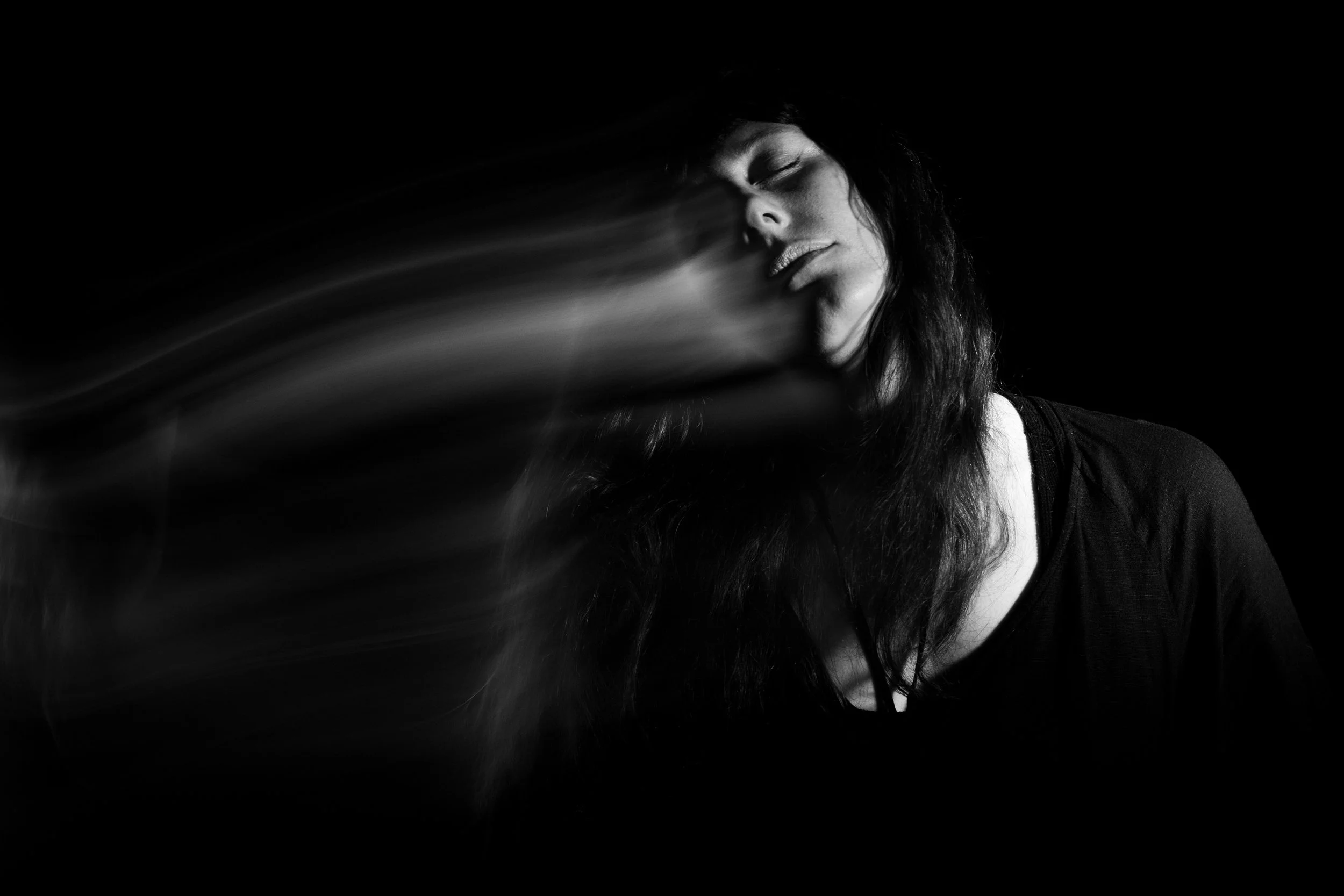
Sacred Space + is a new incarnation of Sacred Space, developed following Jolanda’s meeting with Irene Fortunato at the 2024 edition of the Italian festival Seeyousound/Frequencies, and marked by the introduction of custom wearable controllers. These bespoke wearable interfaces transform gesture into sound manipulation, allowing the performer’s movements, breath, and ritual actions to dynamically modulate the sonic environment. The result is a system in which body, voice, and electronics converge into a single performative organism.
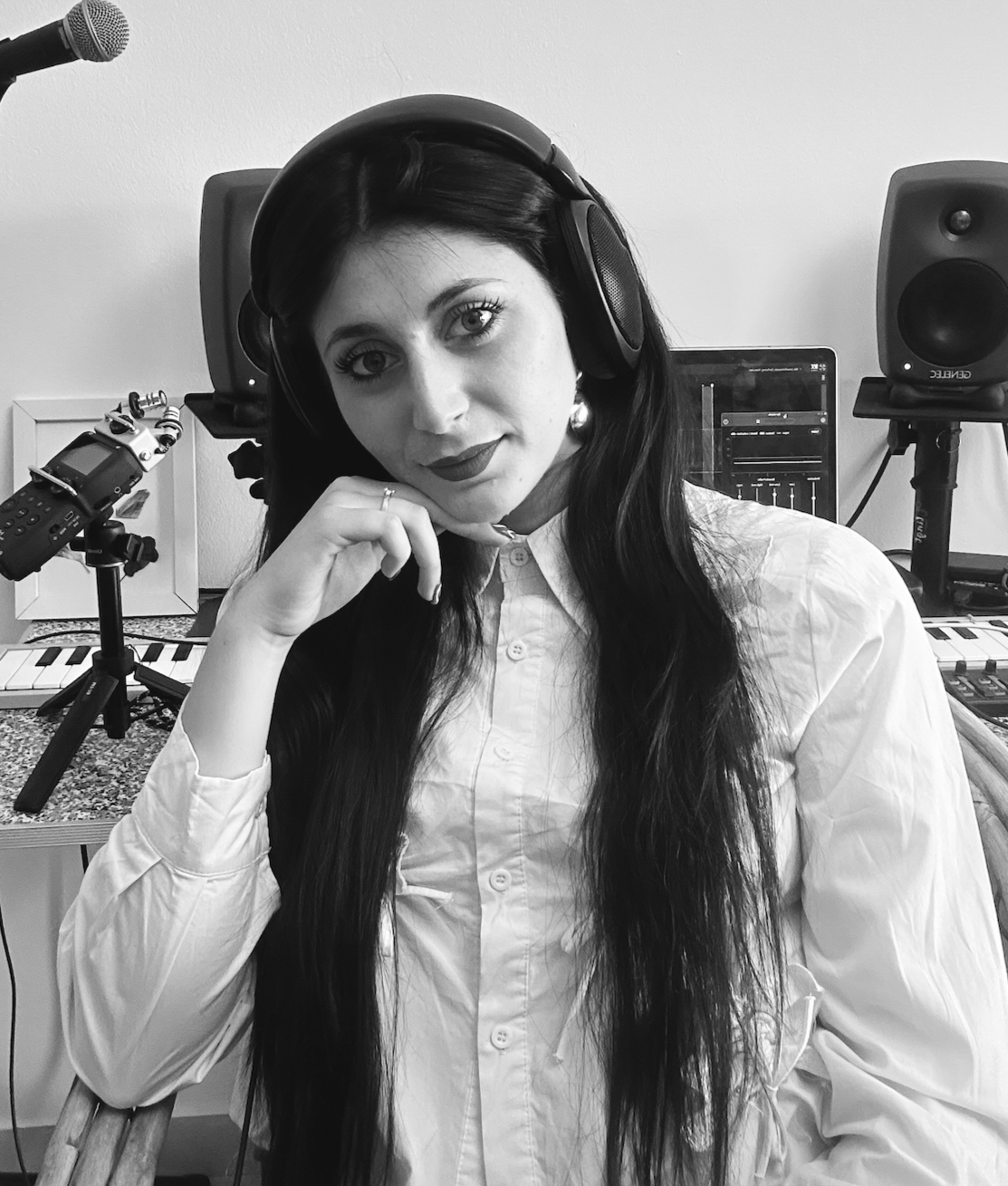
Irene Fortunato contributes to the programming of the sound systems for the controllers and supports the development of ambisonic spatialization, helping to shape an immersive and dynamic sonic environment.
Sacred Space + constructs a liminal, sensorial environment: a transformative experience in which contemporary experimental electronics and archaic ritual memory merge, bringing forgotten female genealogies to the surface through voice, body, image, and technology.
Artist Statement
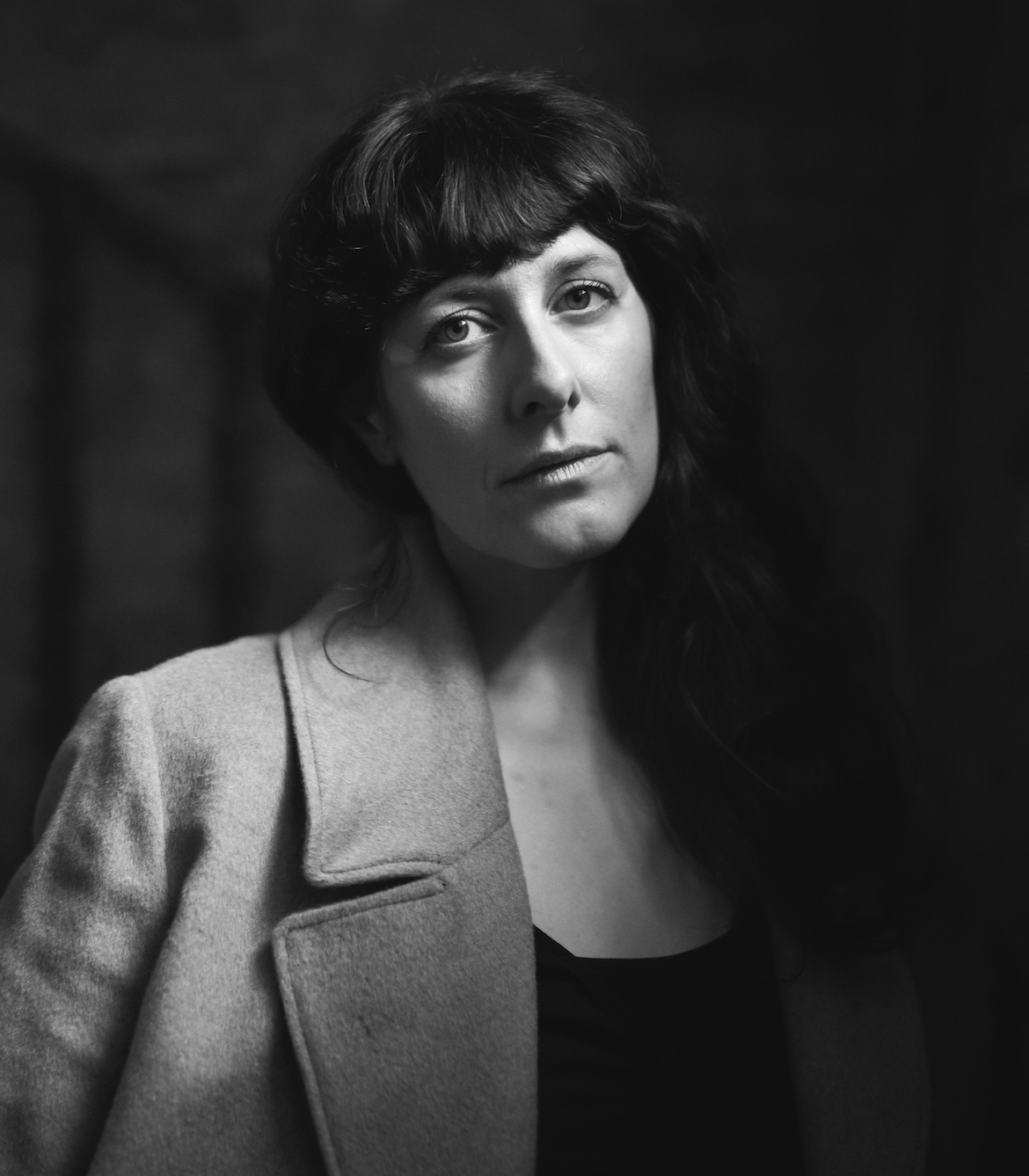
Sacred Space was born as a performative research project around voice, electronics, and sound in space. I was interested in creating a kind of contemporary sacred space: a threshold between technology and nature, between the body and something we cannot fully see or name.
The starting point for me comes from my experience of being in nature and from the feeling that what we call “sacred” has always been deeply connected to ‘Physis’: nature as something alive, generative, and larger than us. I am also interested in the connection between the way we have treated nature and the way we have historically treated the feminine and the forms of knowledge associated with it. Both have often been controlled, reduced, or pushed aside in favor of systems based on domination and hierarchy.
This is one of the reasons why I feel close to Marija Gimbutas when she writes: “I reject the assumption that civilization refers only to androcratic warrior societies. The generative basis of any civilization lies in its degree of artistic creation, aesthetic achievements, nonmaterial values, and freedom which make life meaningful and enjoyable for all its citizens, as well as a balance of powers between the sexes.”
For me, the idea of ritual is at the center of the work. A ritual can be very simple: a gesture repeated, a movement, a sound, a voice. It does not necessarily have to make logical sense. What matters is the intention behind it, and the way repetition can change our perception of time and of the space around us. Humans have always used singing, dancing, architecture, and symbolic gestures to create meaning and to make sense of what they cannot control. Dimitris Xygalatas describes ritual as something connected to rhythm, movement, and symbolism, and also to our need to create a sense of order when things feel uncertain.
In Sacred Space +, I work with repetition, wordless voice, movement, and spatialized sound in this way. The technology is not there simply to process sound. The actions themselves are part of the ritual.
The four archetypes - shaman, sibyl, mystic, and witch - come from my interest in figures who have carried forms of knowledge that were often considered dangerous, irrational, or simply not recognized. They are connected to intuition, the body, nature, healing, prophecy, and forms of knowing that do not always pass through language or rational explanation. Through them, I try to bring back something that feels very old: a kind of memory that exists before words.
The voice is therefore not used to tell a story in the traditional sense. I work with singing without semantic language, with sounds that are closer to breath, gesture, and physical presence. At the same time, I use wearable controllers that allow movement to affect the sound. The body becomes part of the electronic system. A gesture can change the voice, transform the texture, or open another layer of sound.
I am especially interested in the relationship between the natural and the digital. I don't see technology as something separate from the body. I want to understand what happens when the machine starts listening to the body and responding to it. The electronic system becomes almost like another layer of the performer, something that extends the voice and movement rather than controlling them.
Sound spatialization is also important because the space itself becomes part of the performance. Sound doesn't simply come from speakers; it moves, surrounds, appears and disappears. It can feel close to the body or suddenly distant. In this sense, the space becomes part of the dramaturgy of the work.
Sacred Space + brings together my interest in voice, ritual, technology, nature, and the body. I am trying to imagine a different relationship with the machine: not technology as something that dominates or separates us from nature, but technology as something we can listen to, interact with, and make sensitive to the body.
Jolanda Moletta
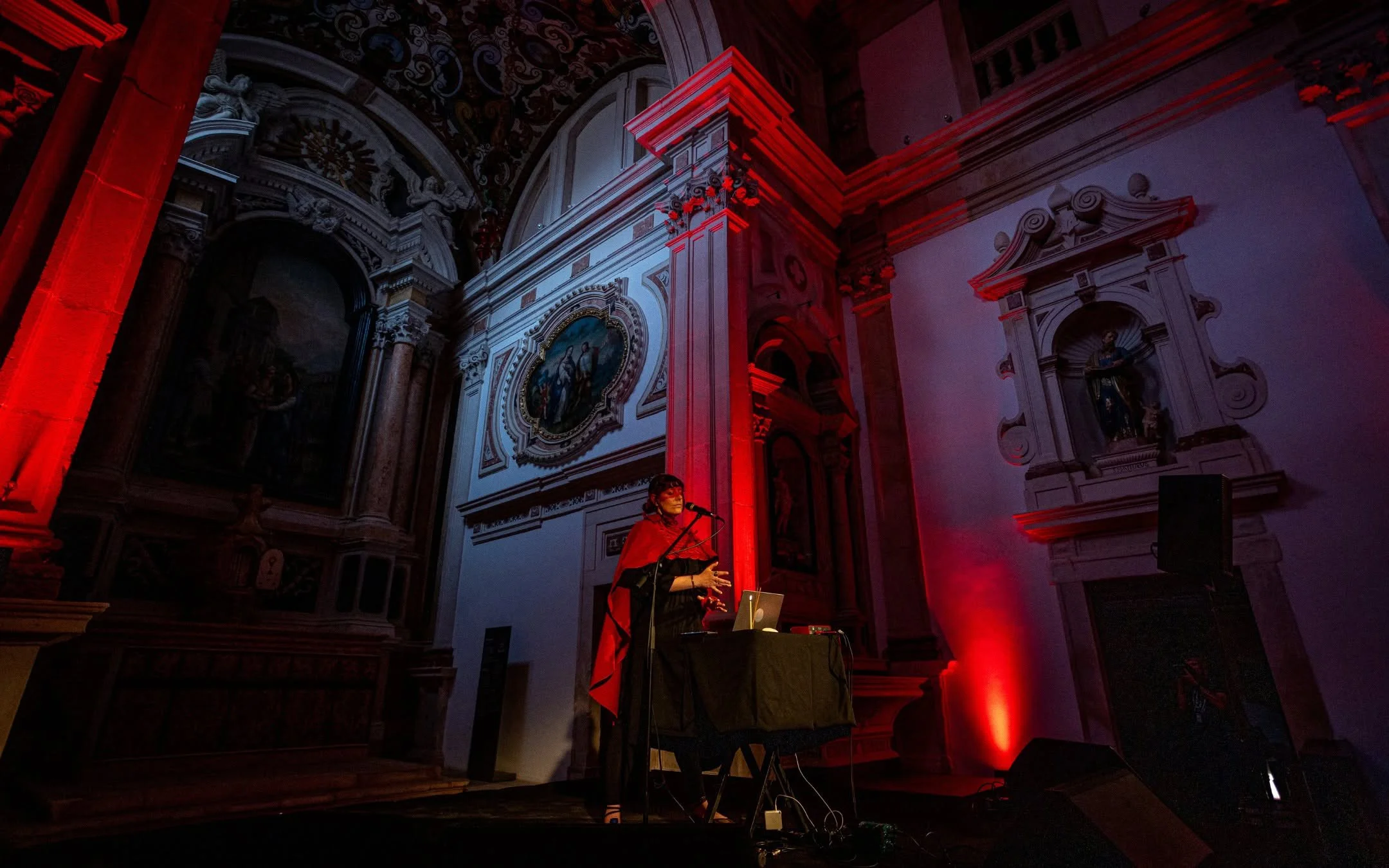
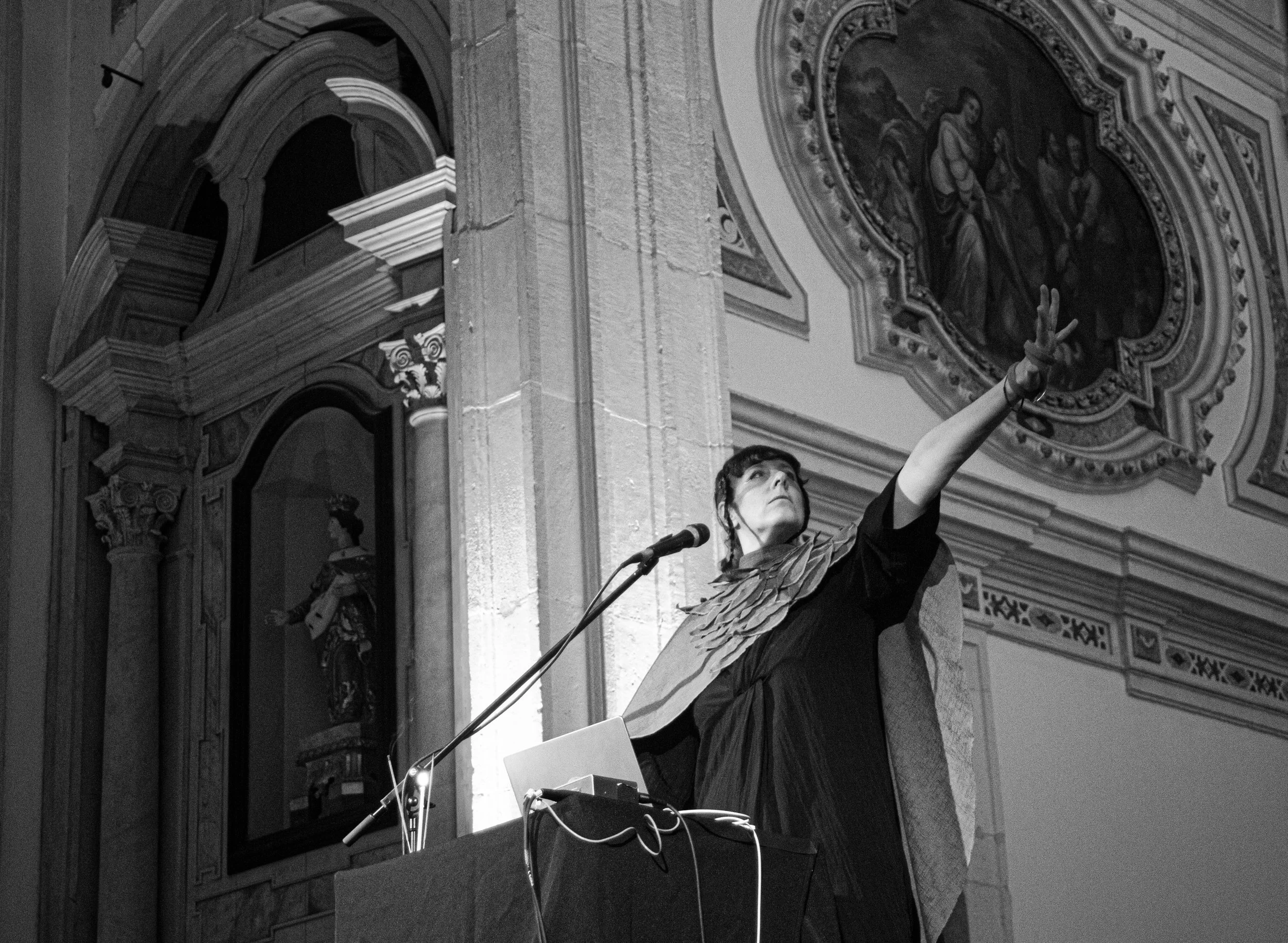
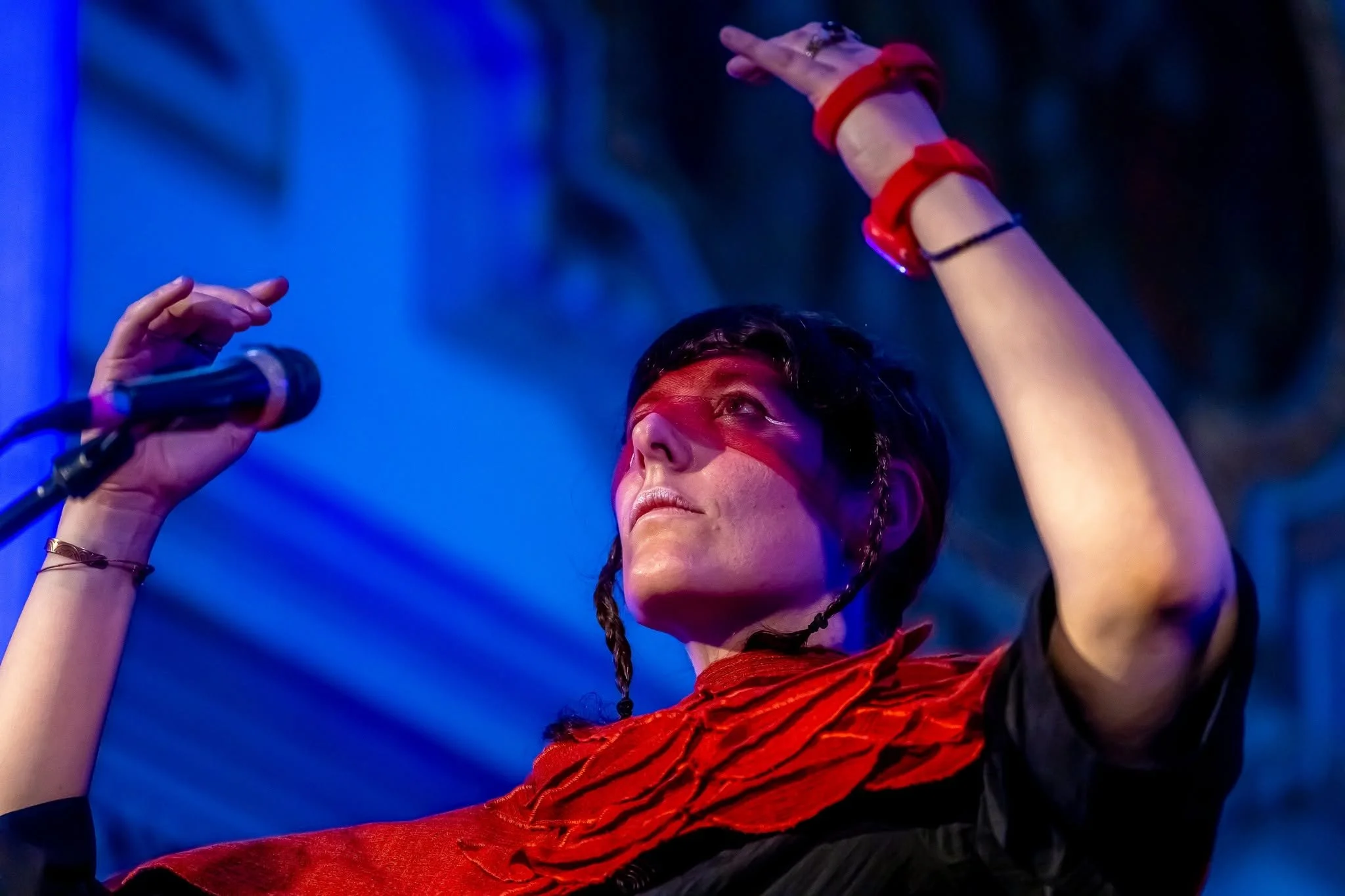
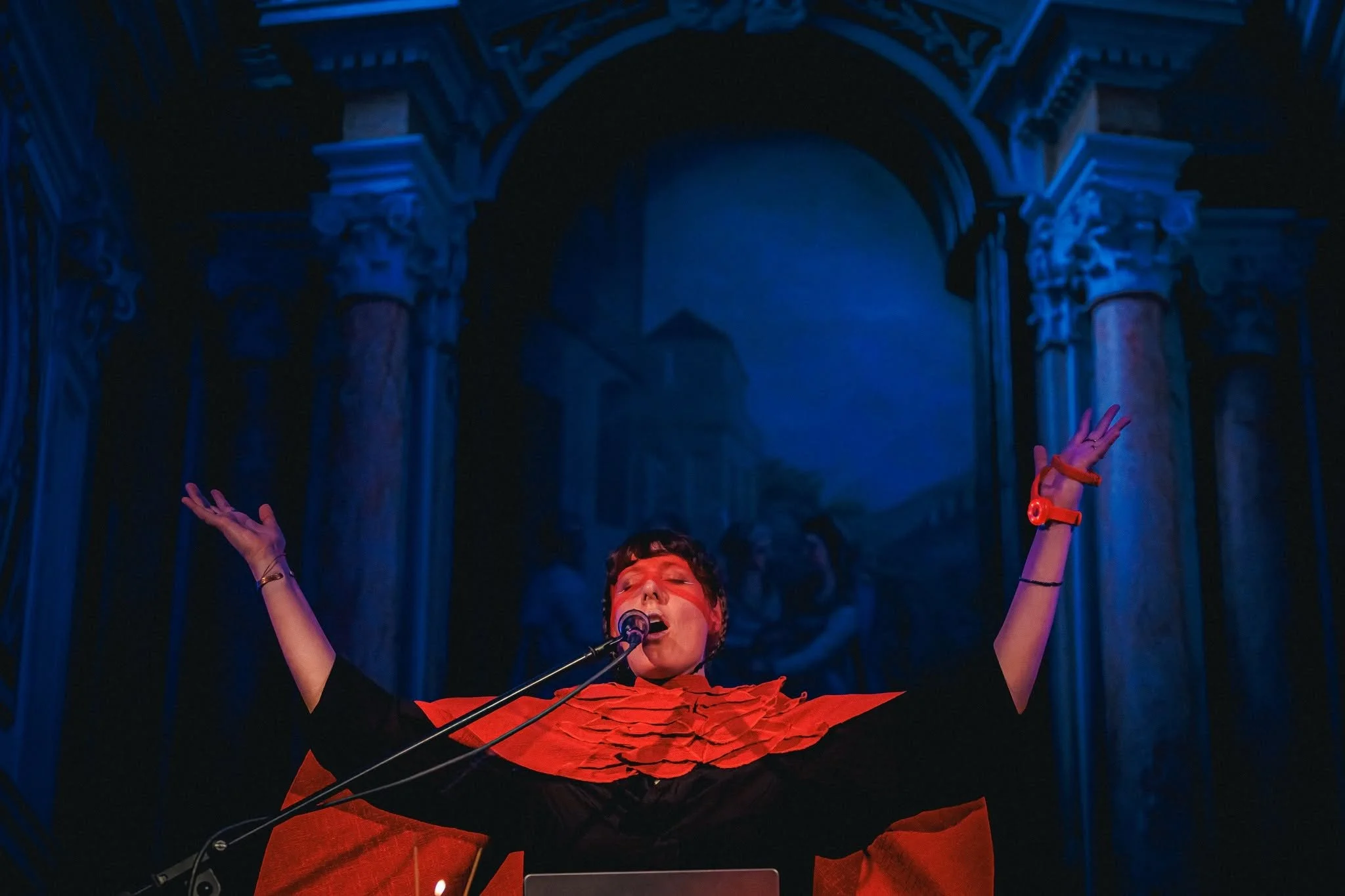
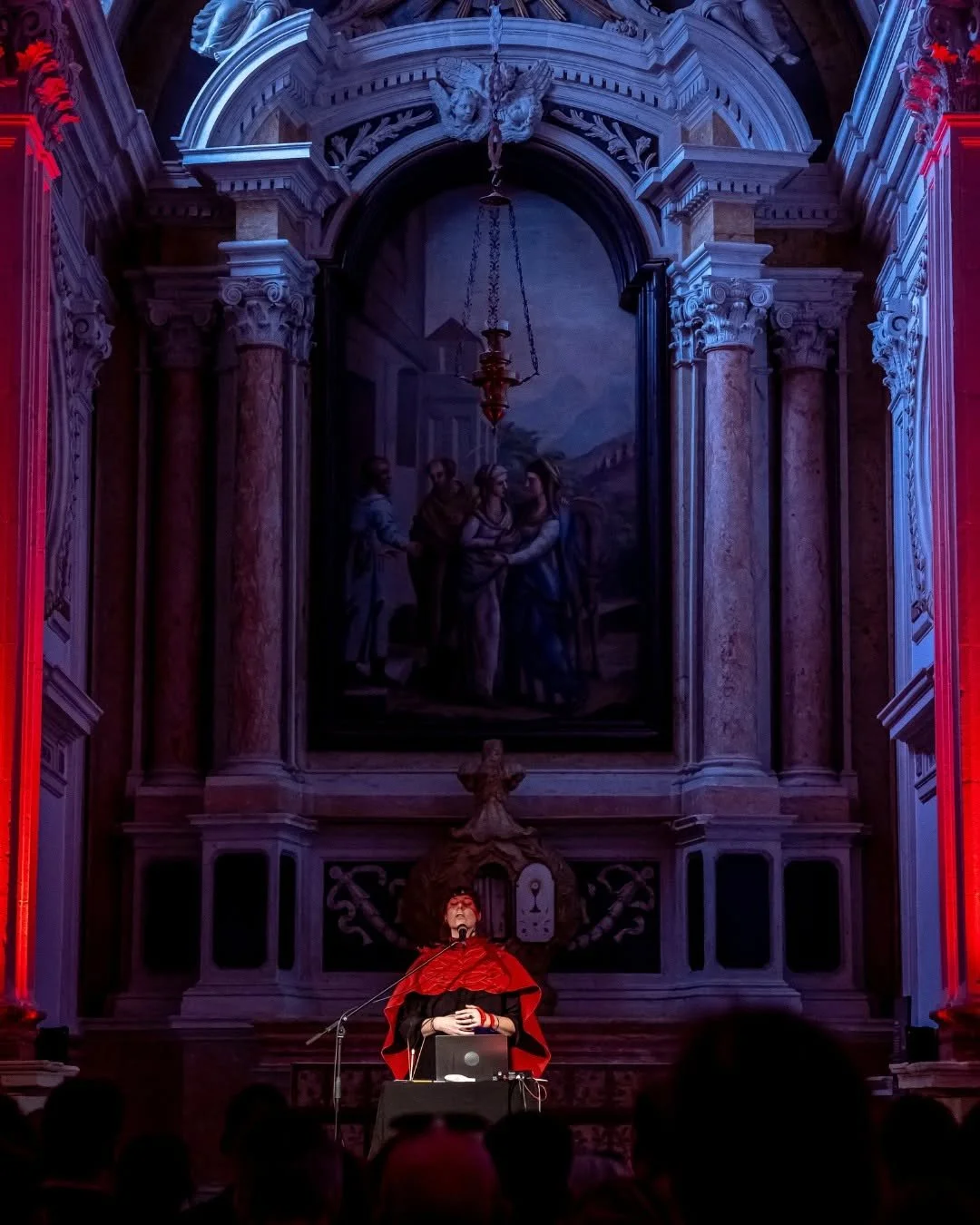
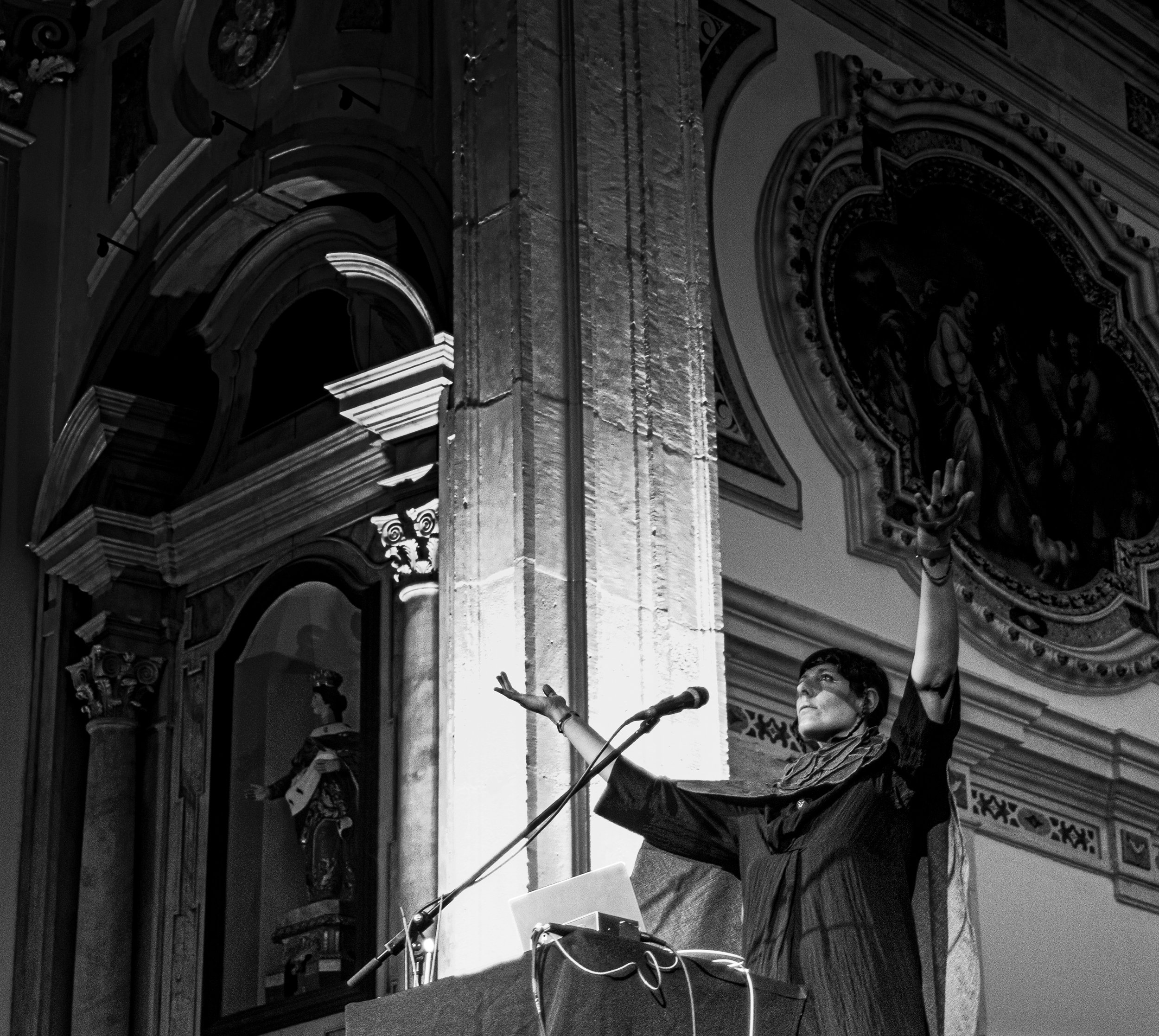
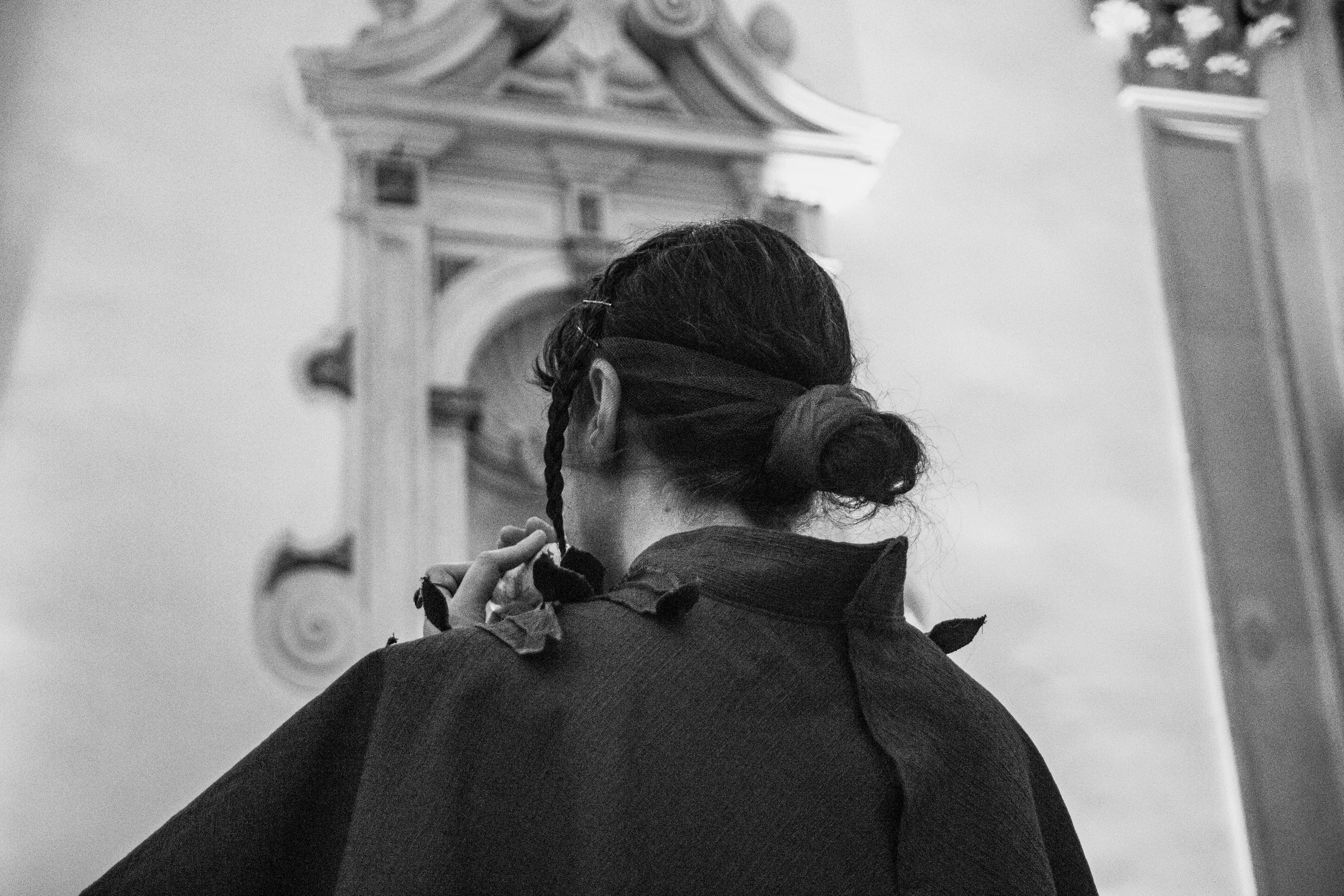
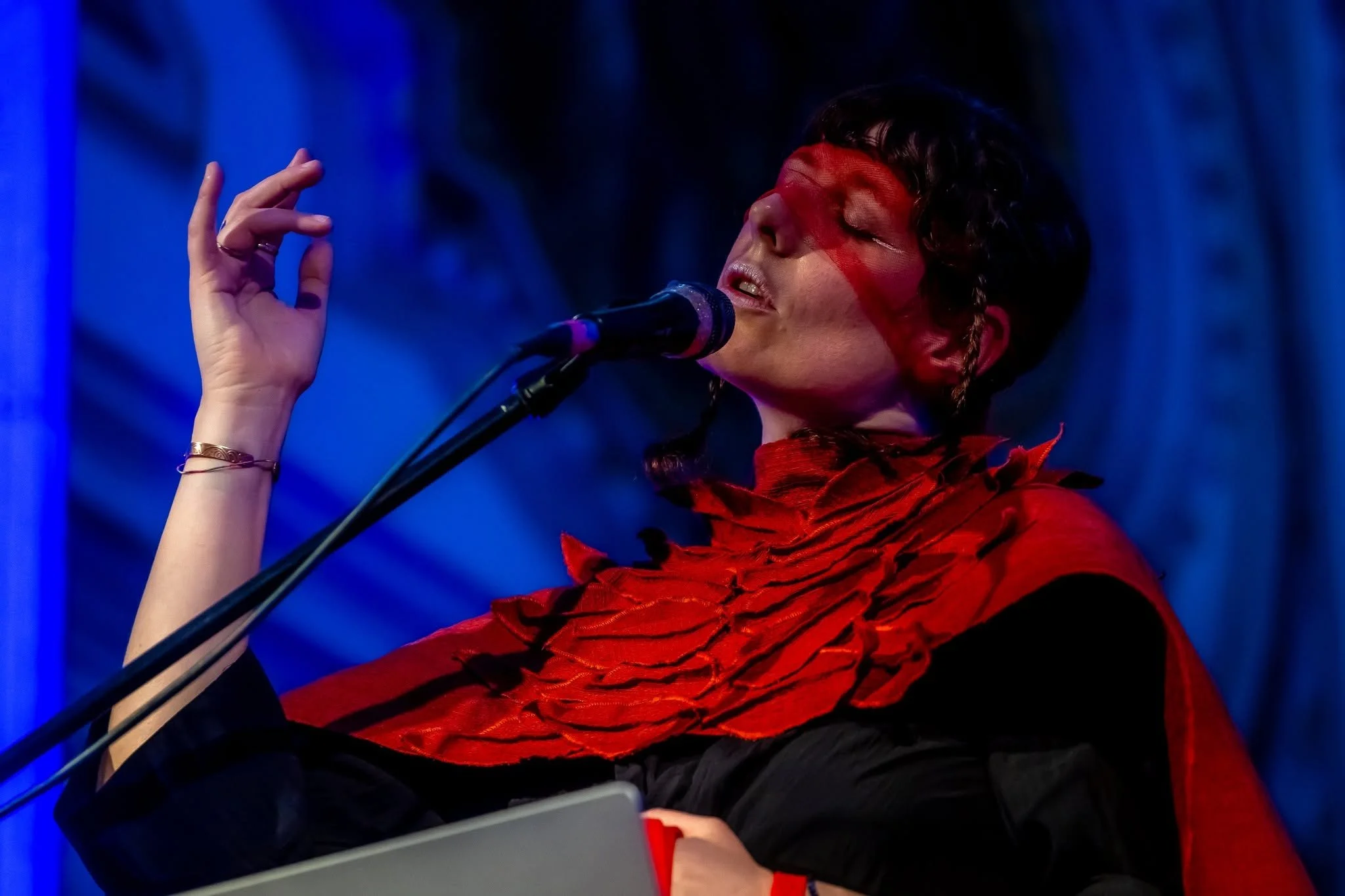
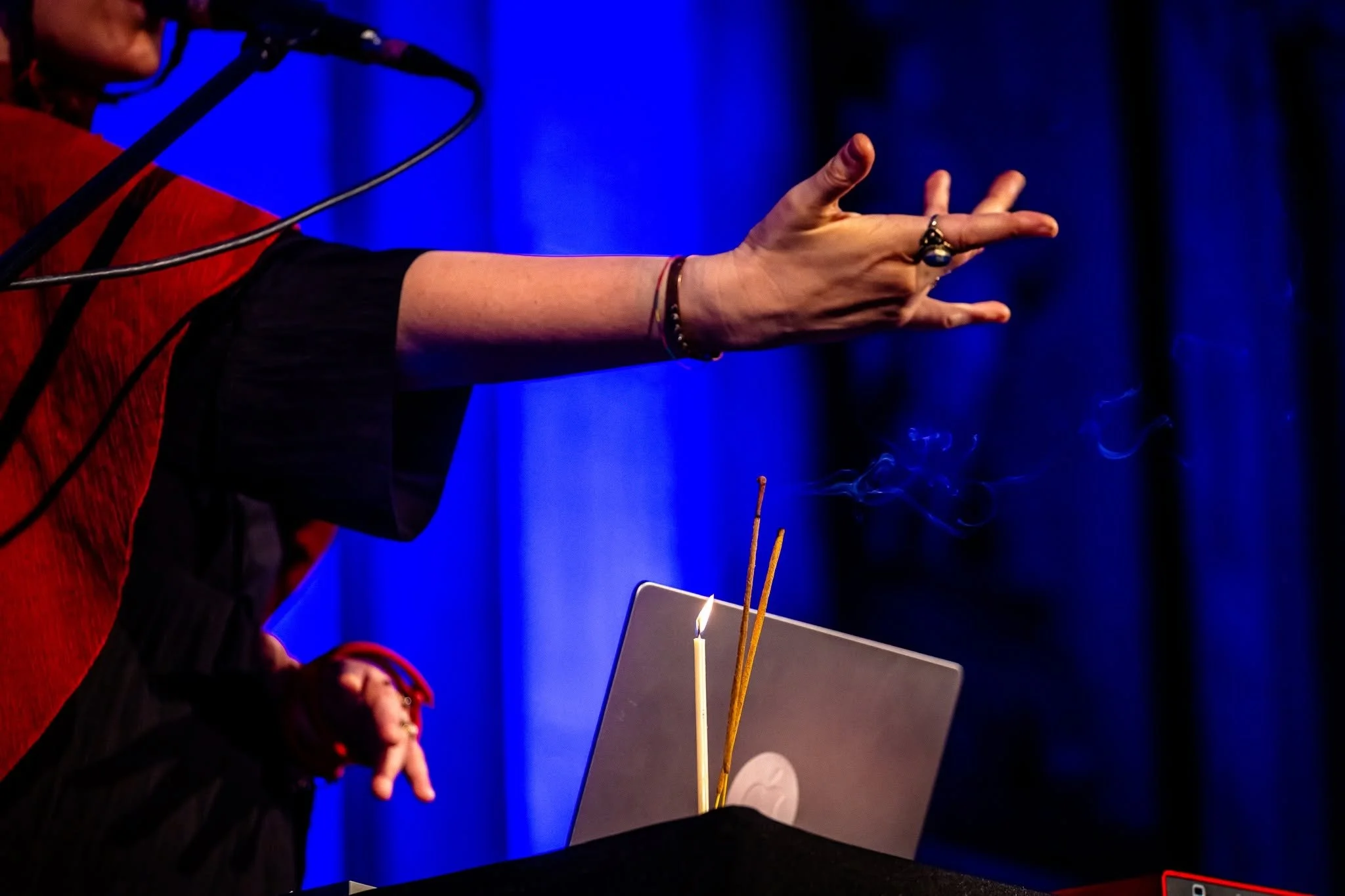
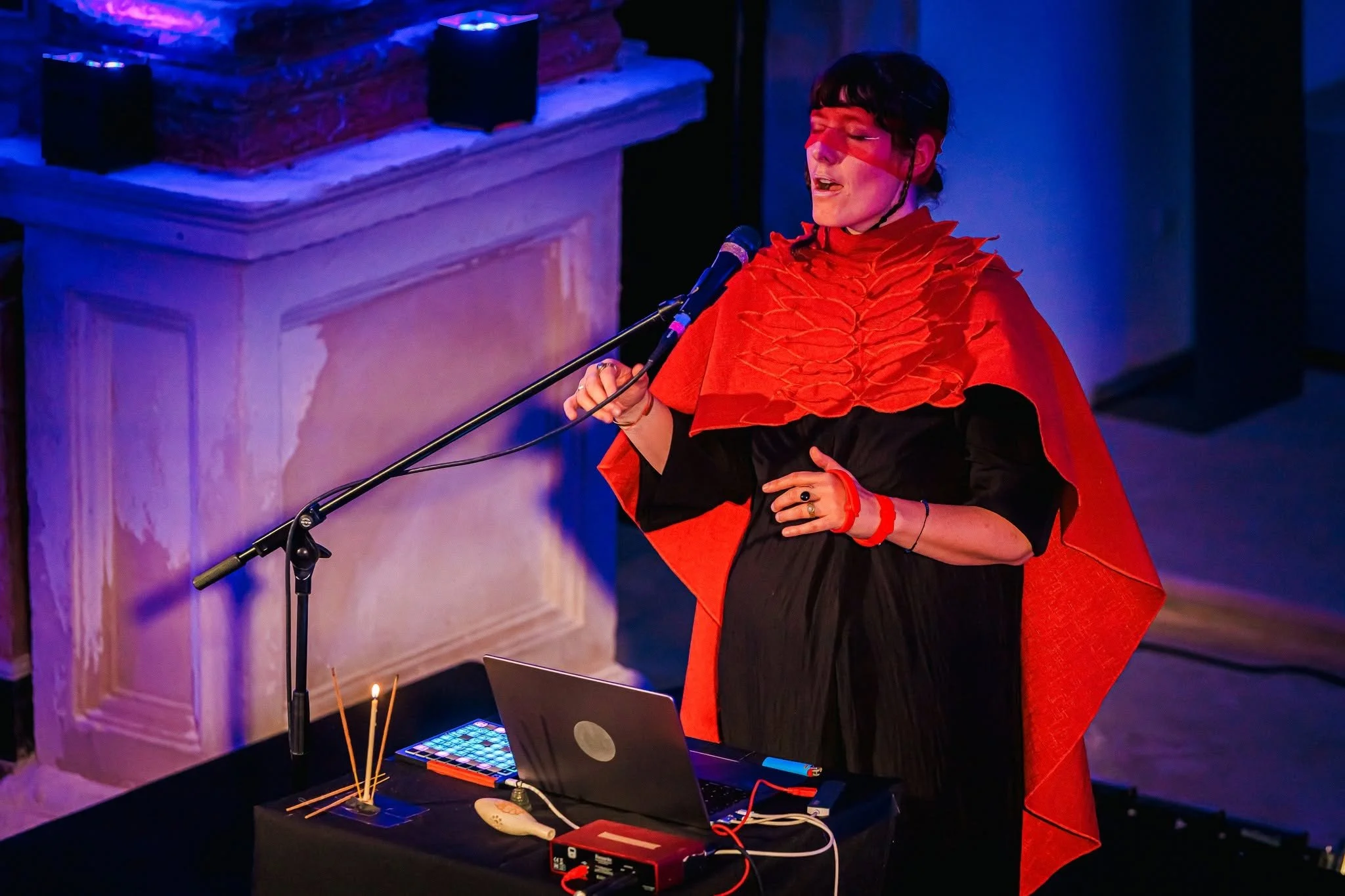
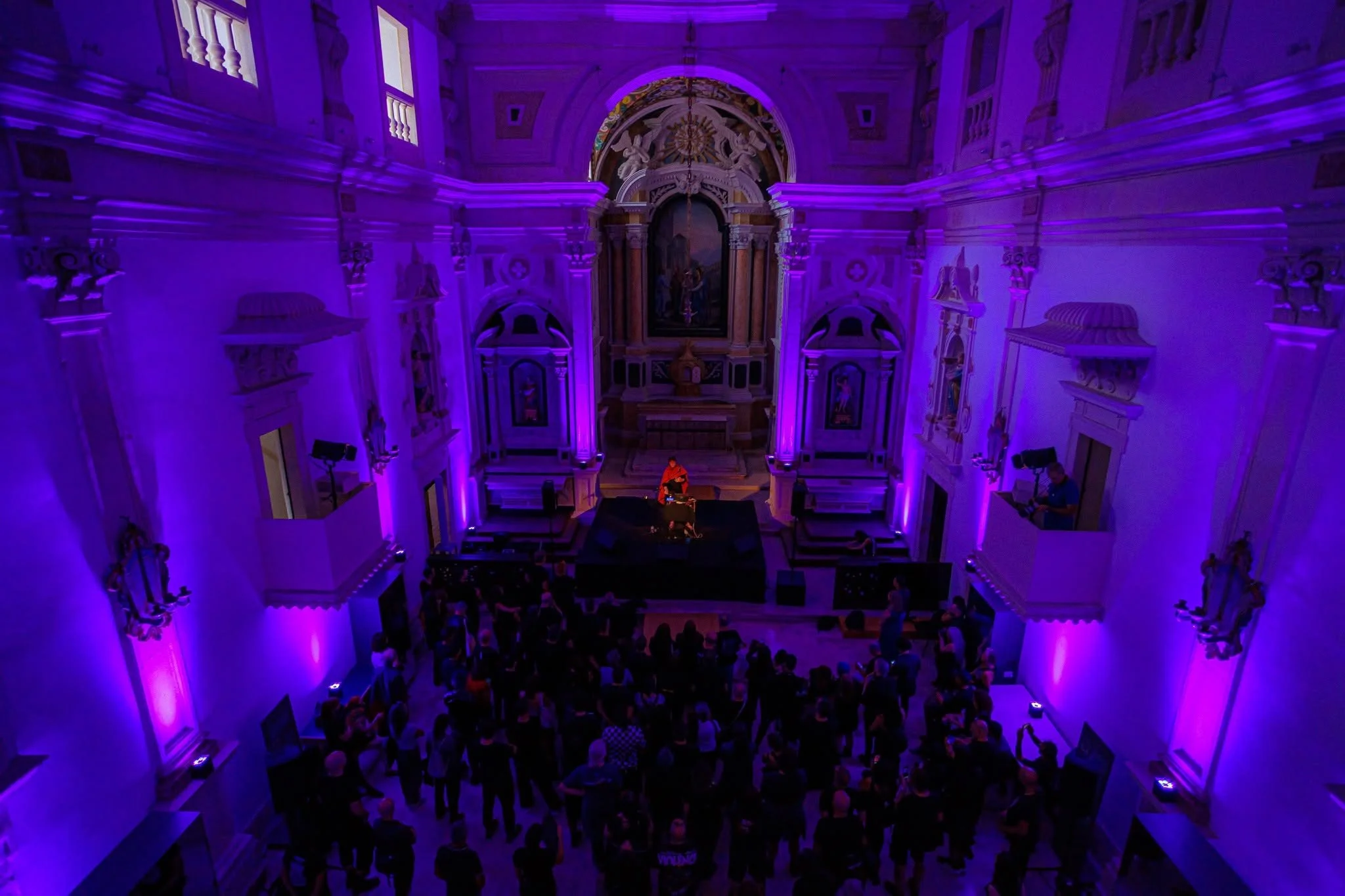
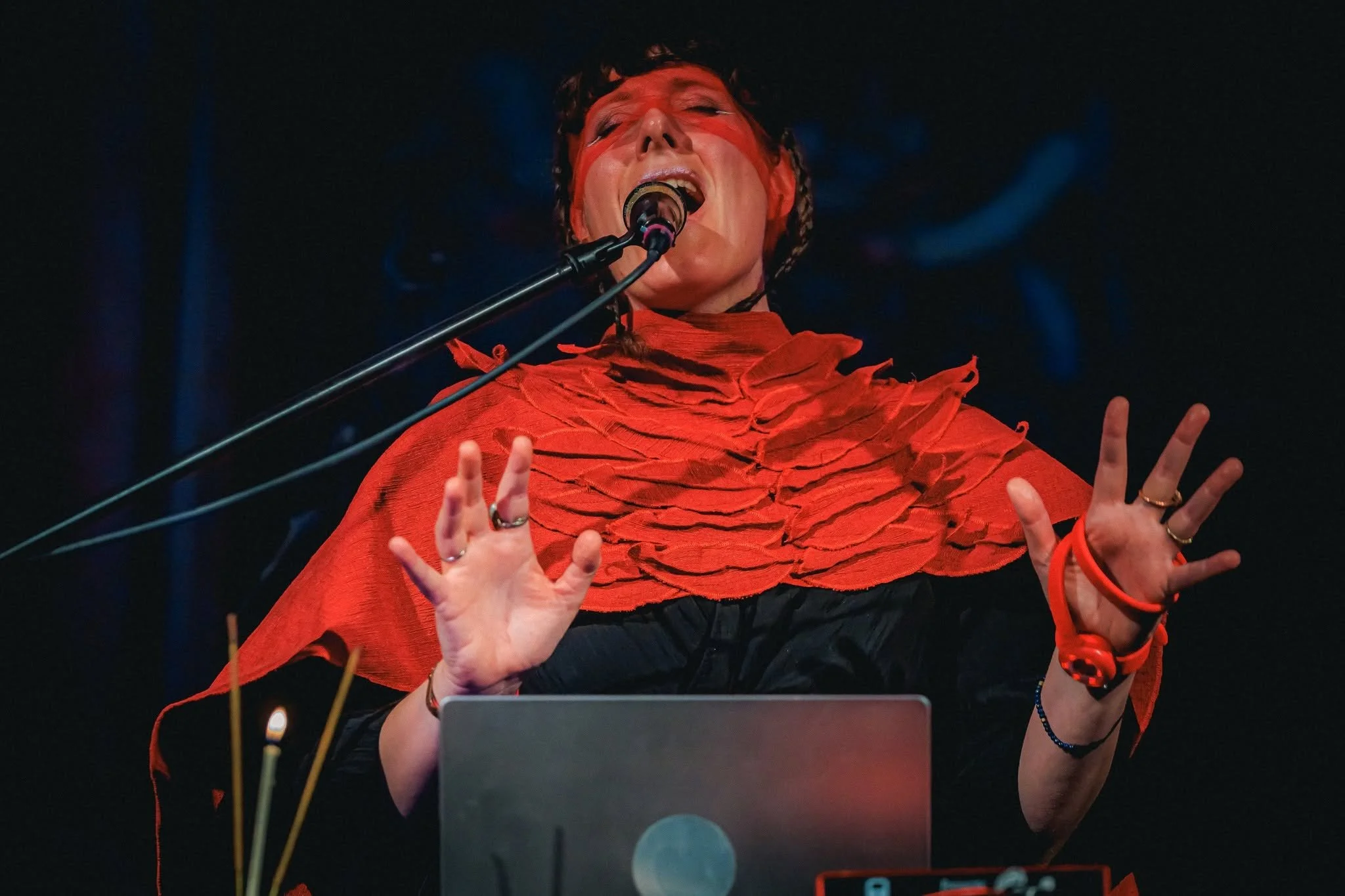
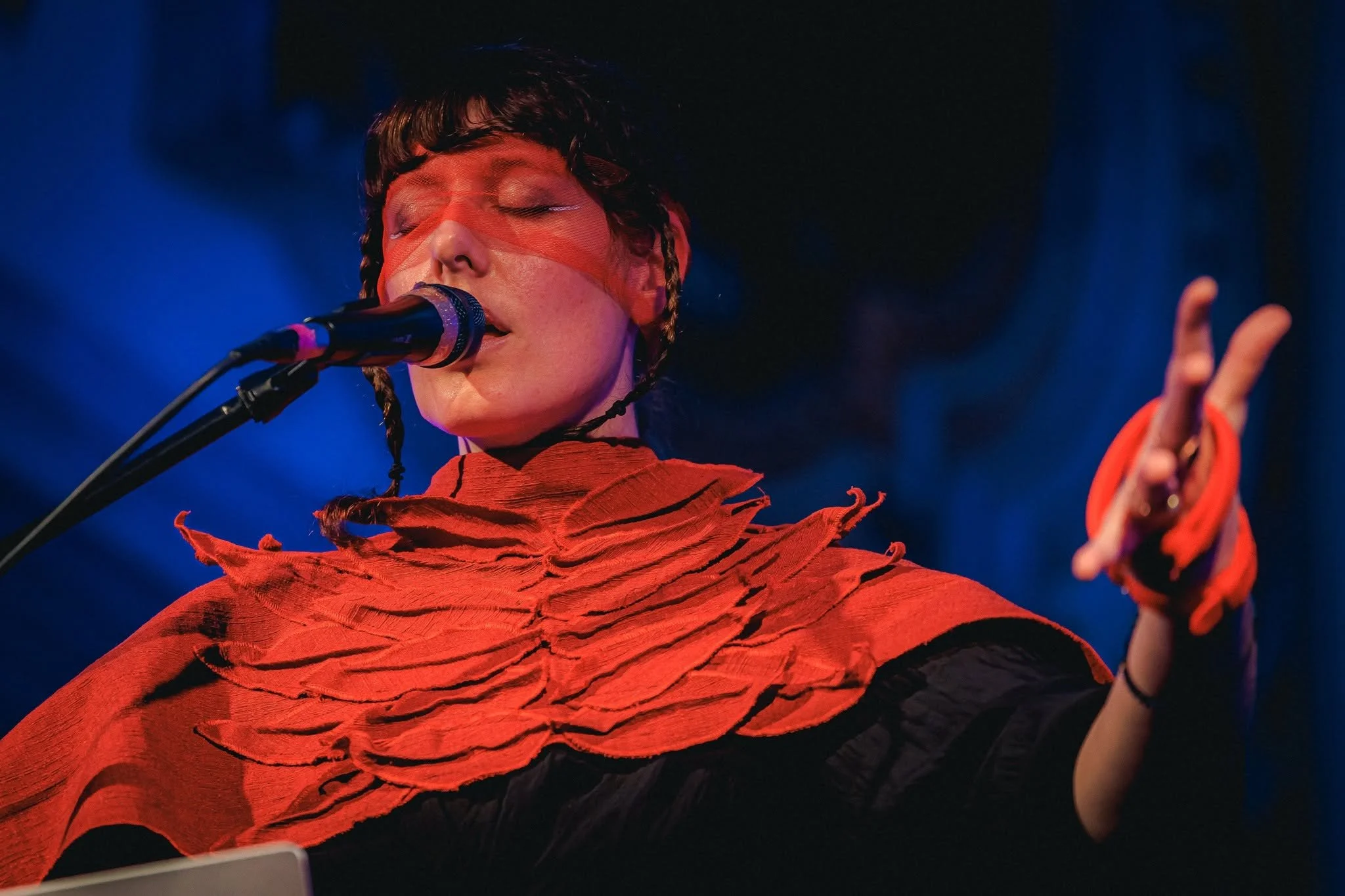
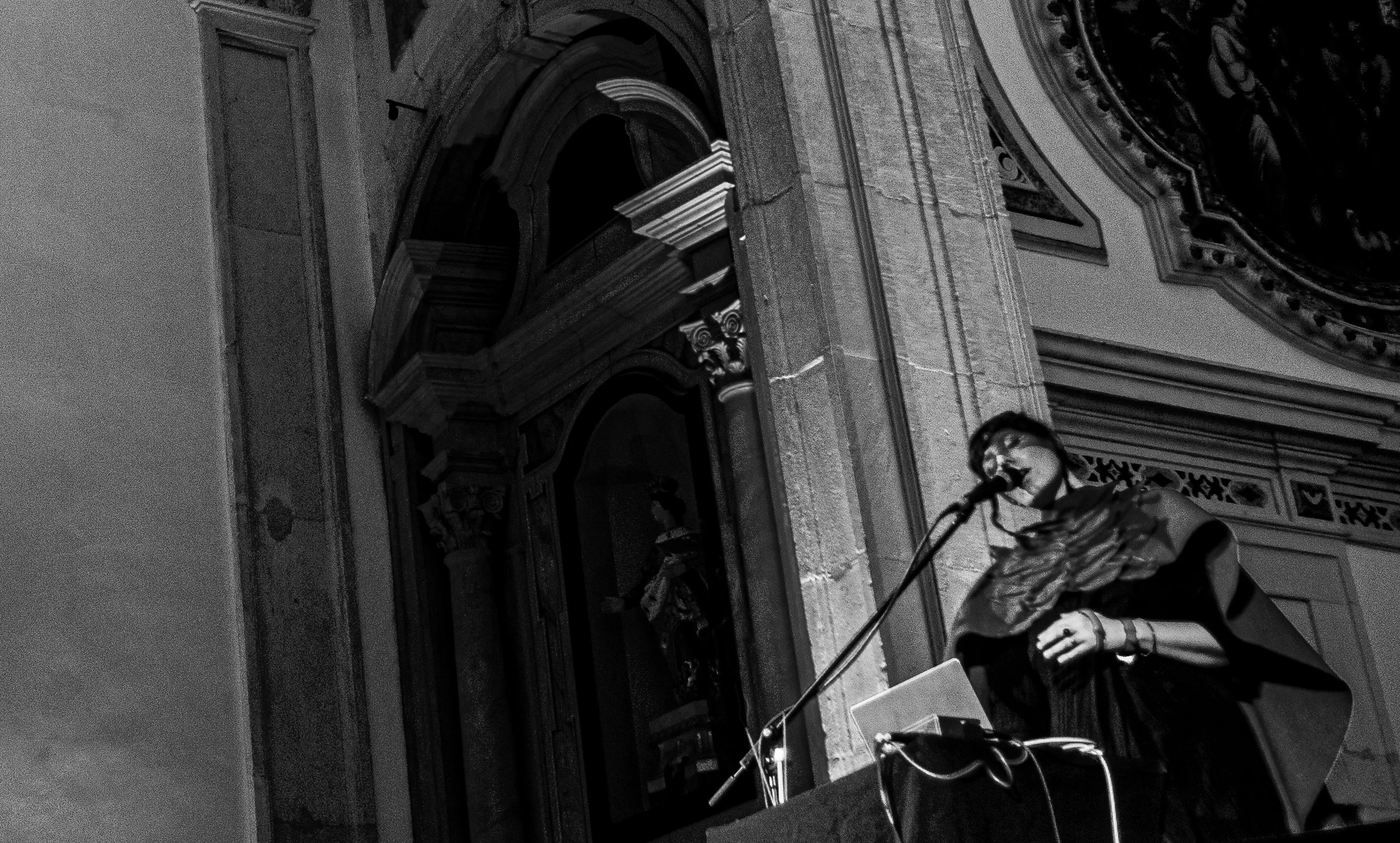
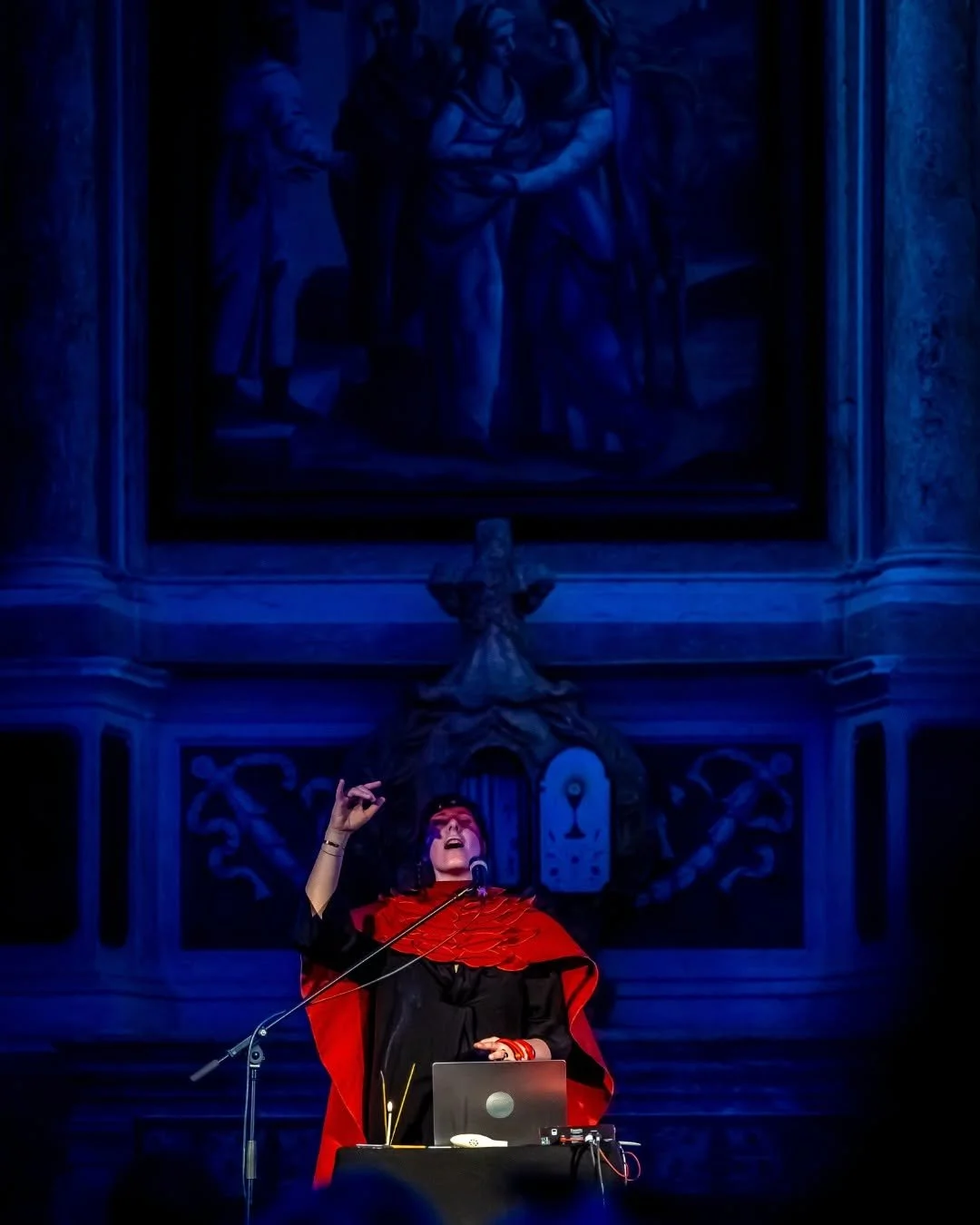
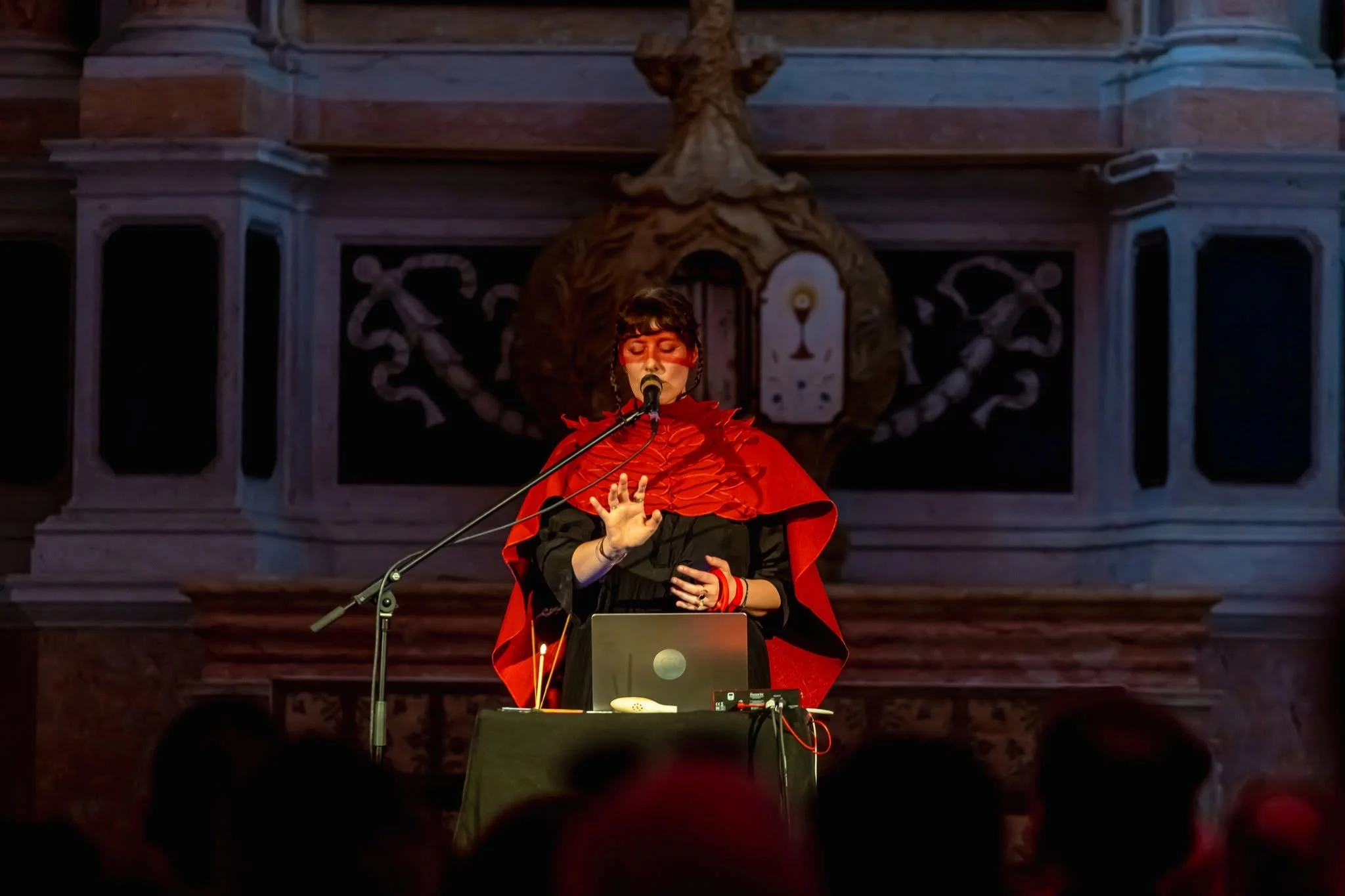
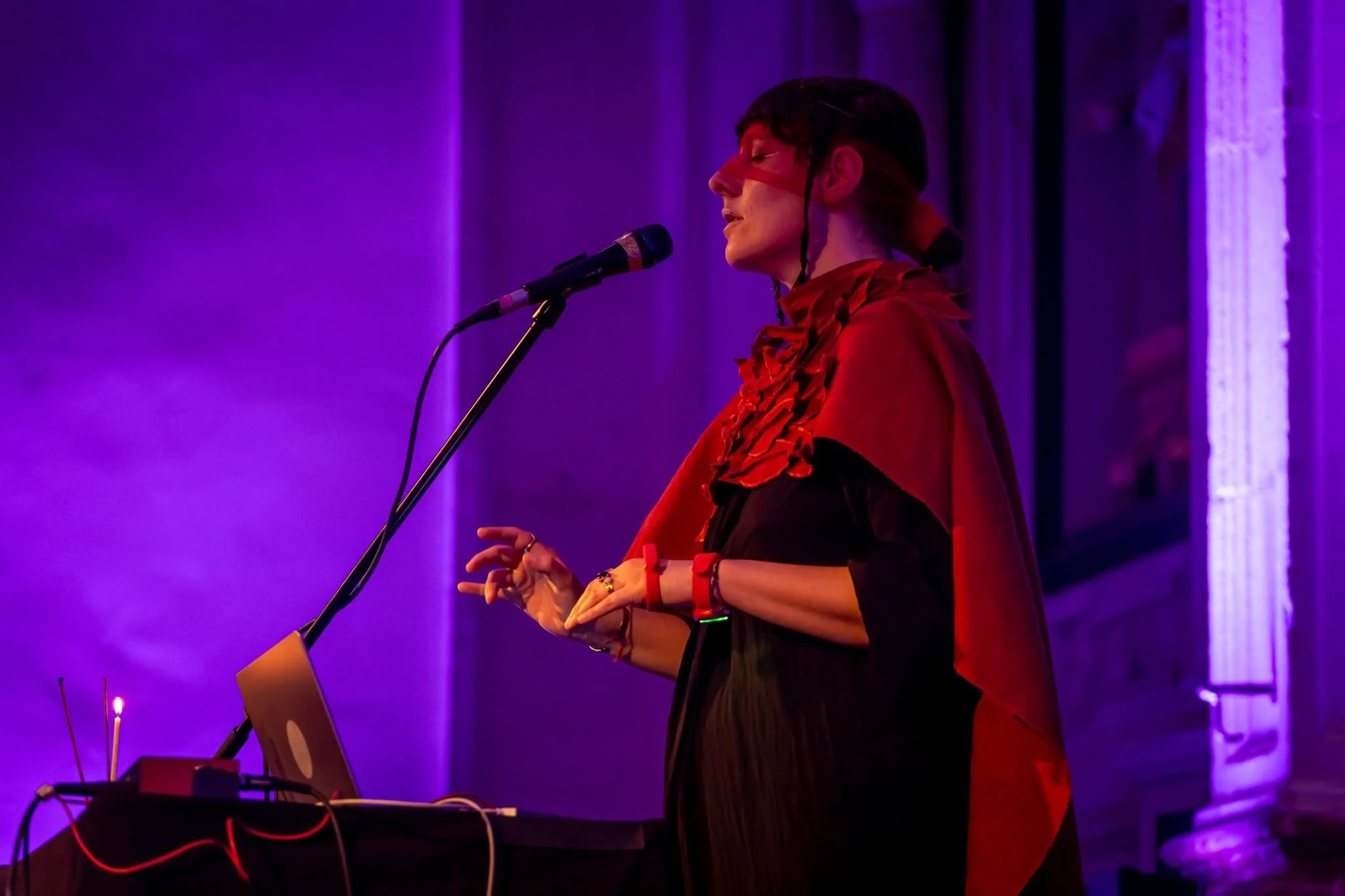
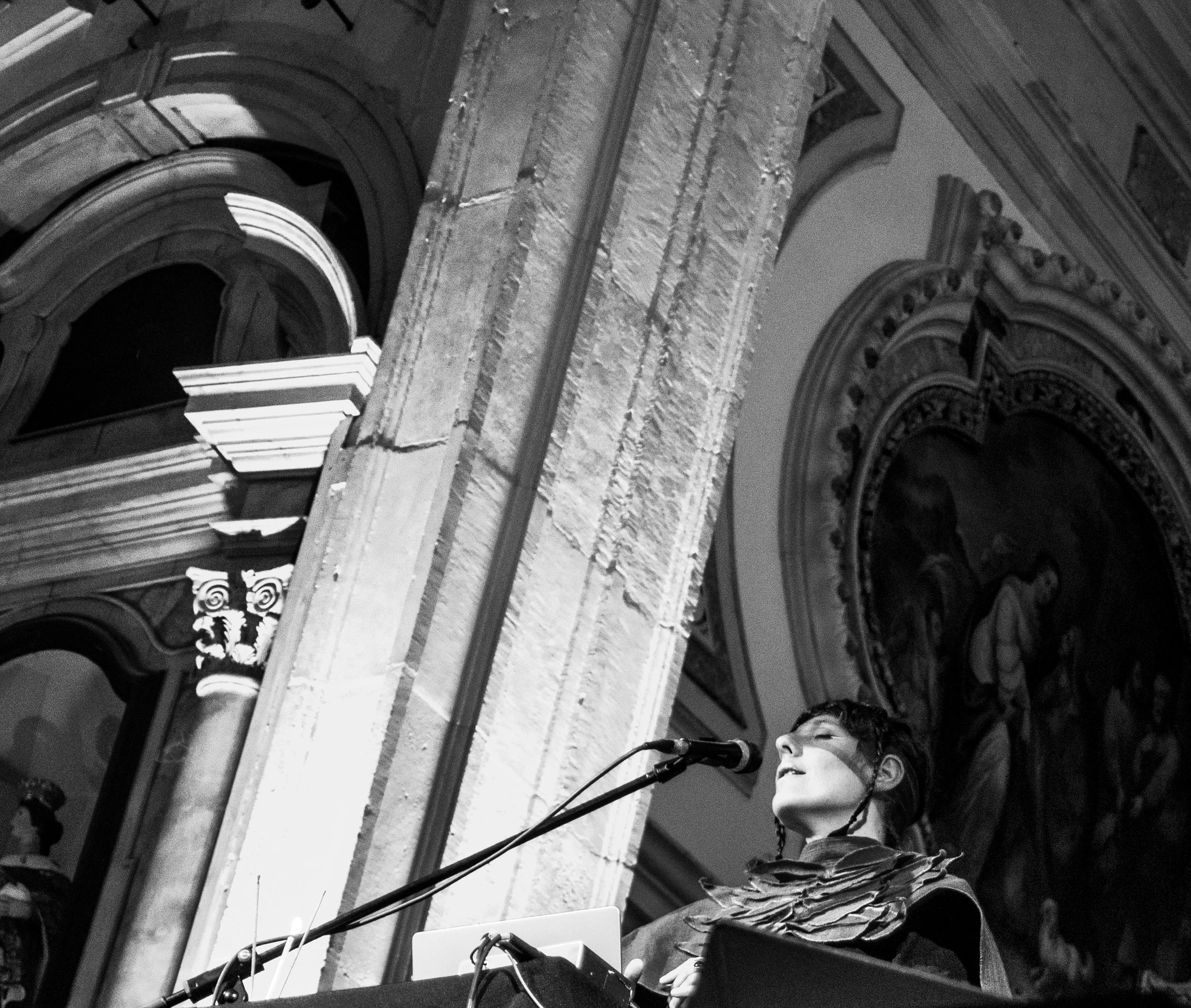
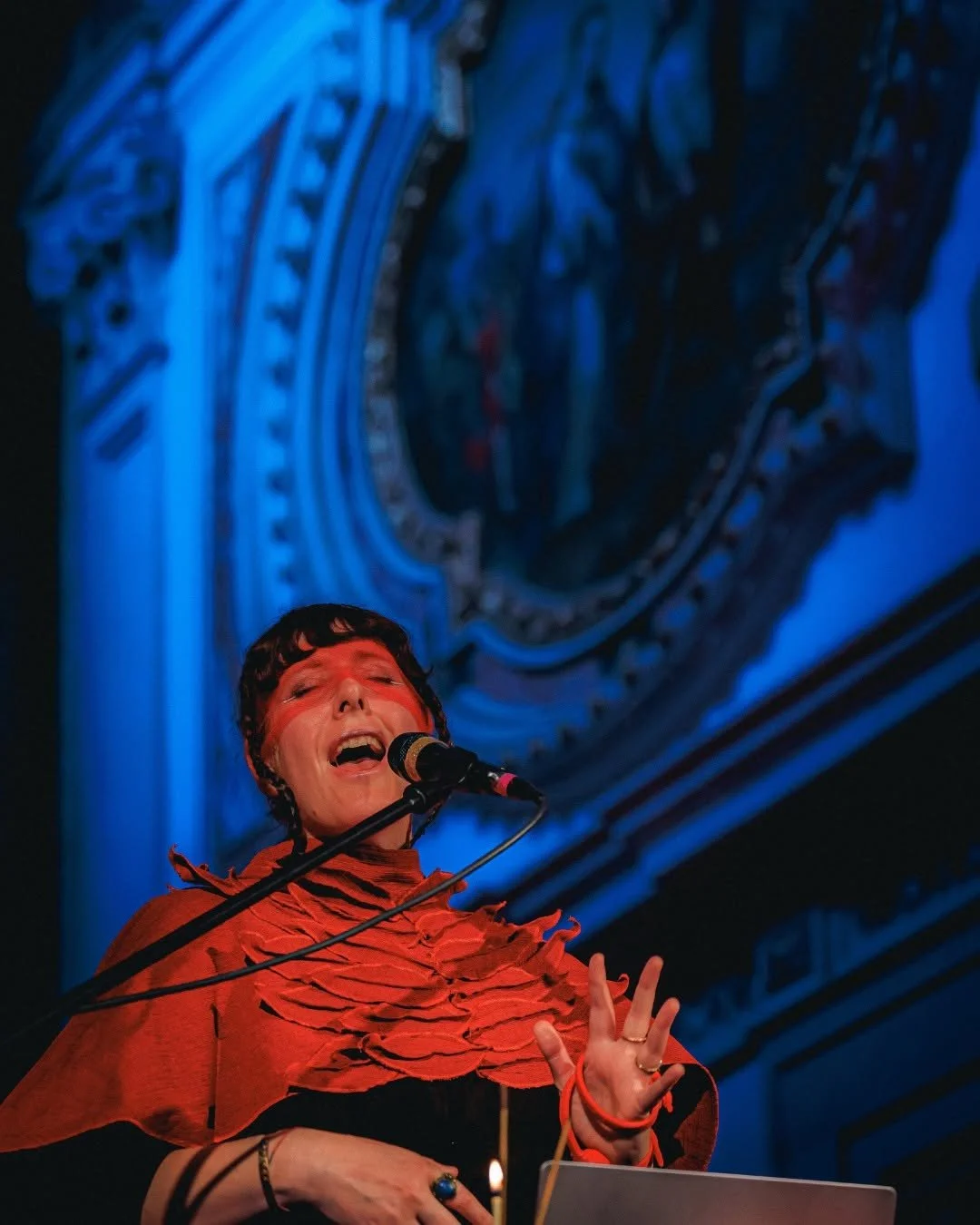
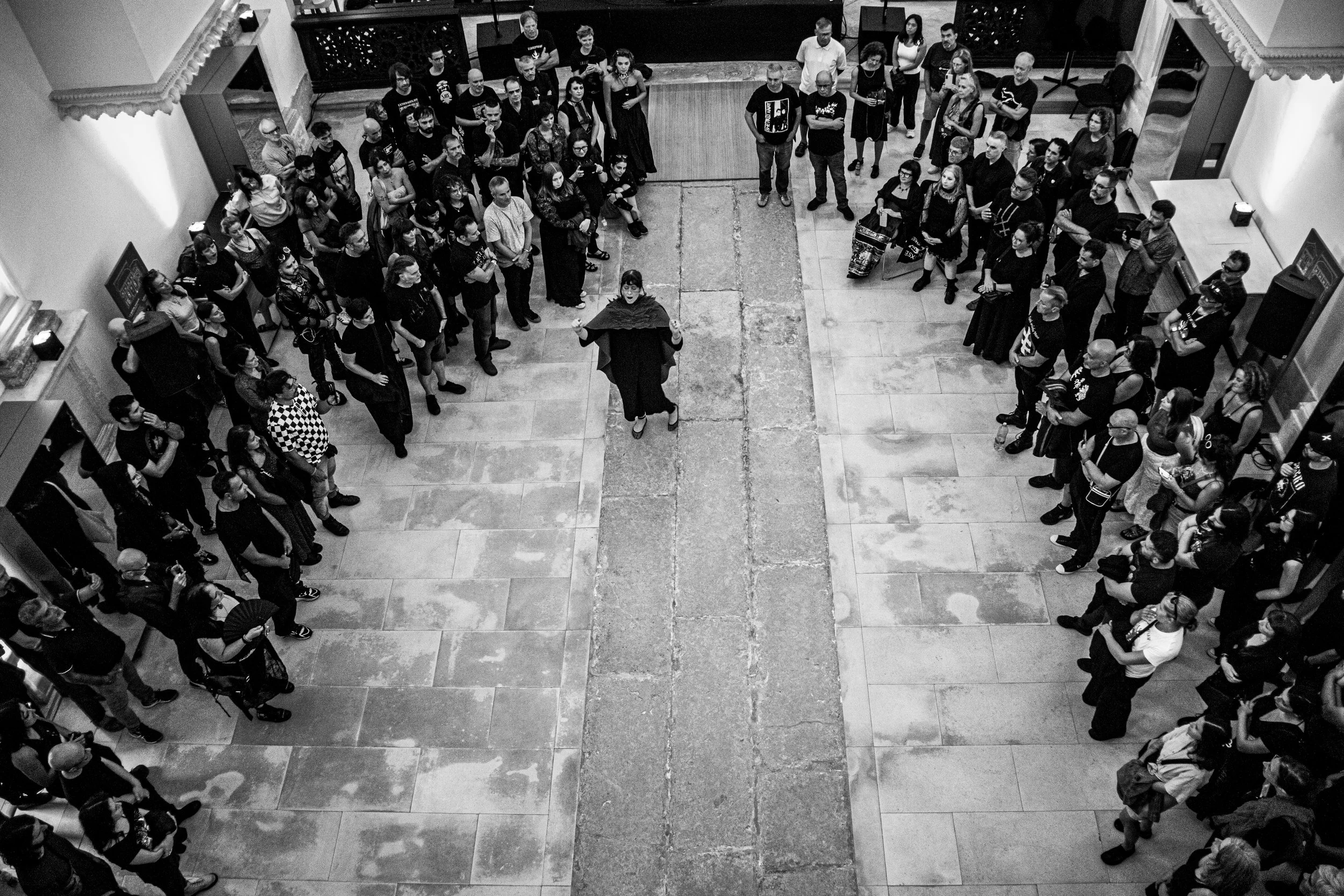
Jolanda Moletta Live at Extramuralhas 2026, Igreia de Misericorórdia, Leiria - Photos by Gil Álvaro De Lemos and Vanda Cristina
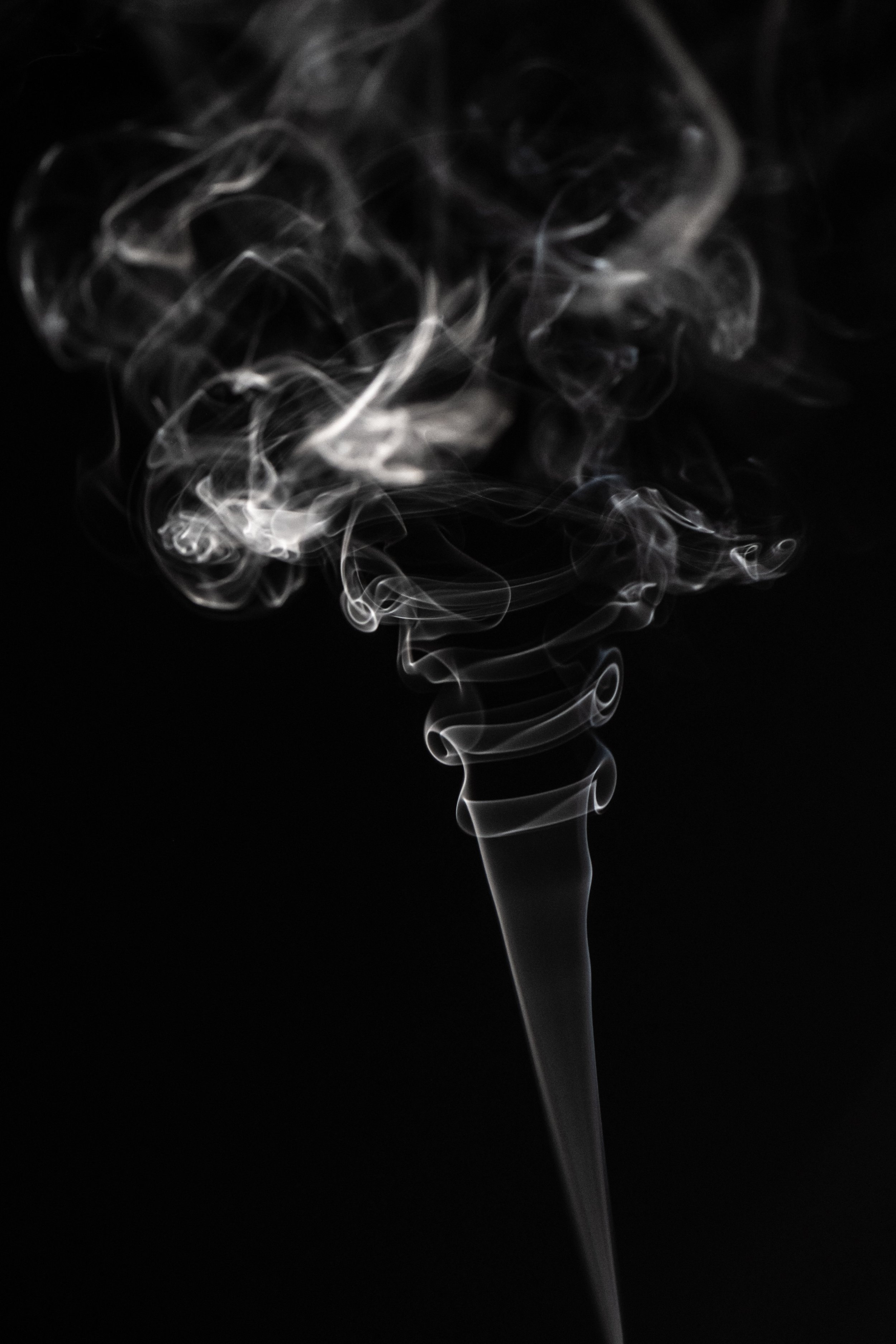
Photo © Giorgio Violino

Photo © Giorgio Violino
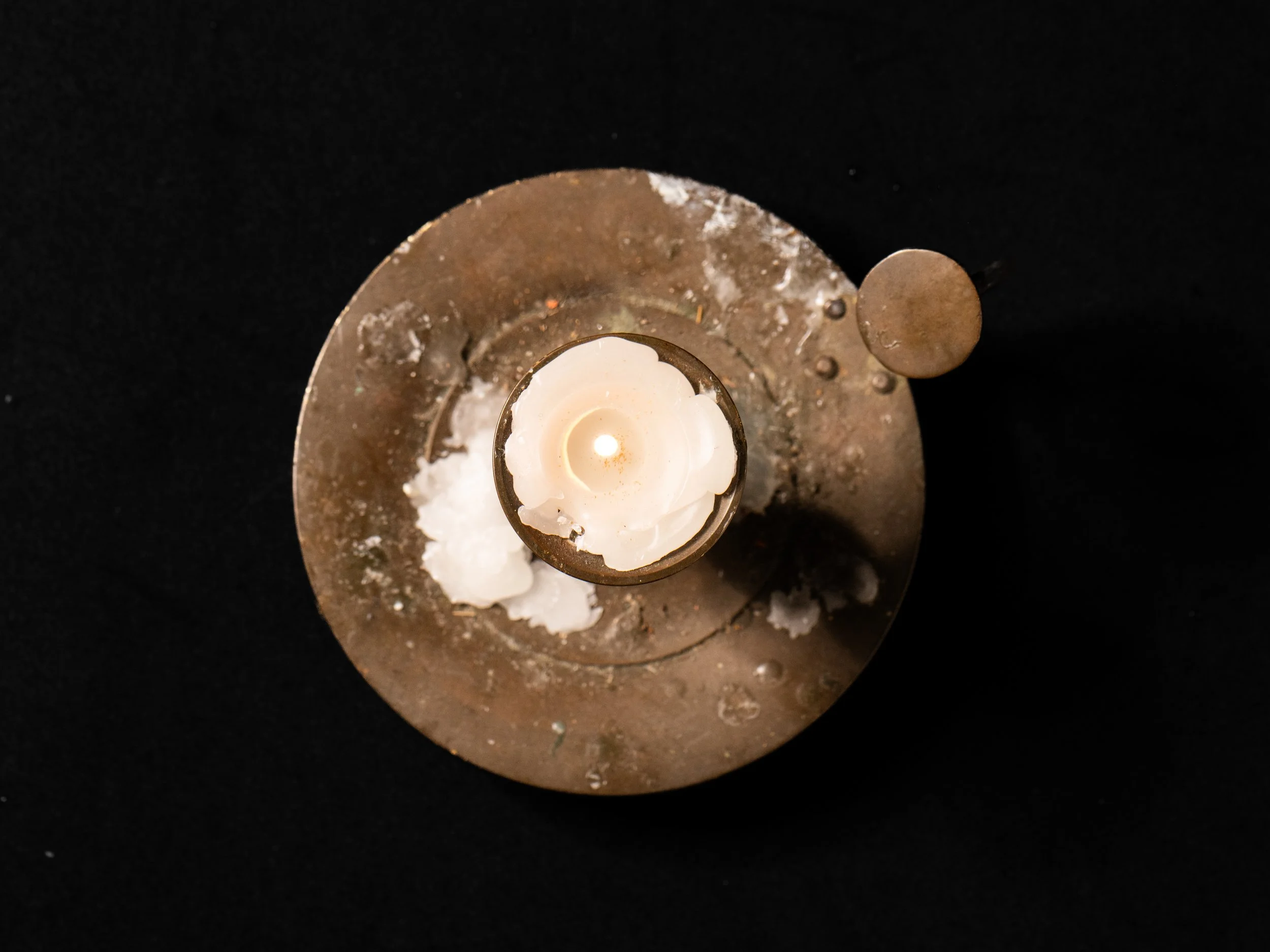
Photo © Giorgio Violino
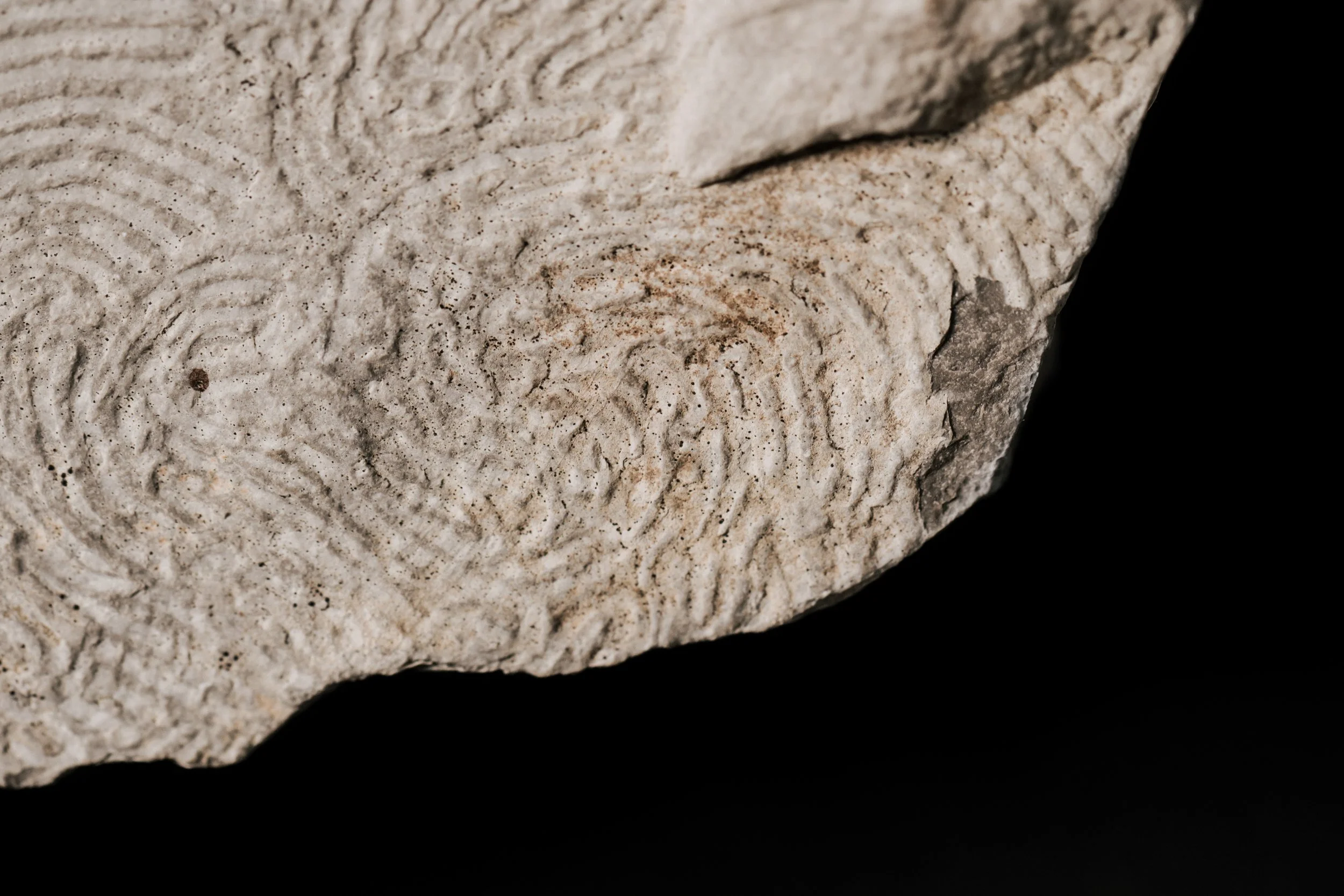
Photo © Giorgio Violino